

Off-Grid Solar Power in Thailand: Full Energy Independence?
As global interest in sustainable living grows, many individuals are turning to alternative energy sources to reduce their environmental impact and achieve energy independence. In Thailand, solar energy is quickly becoming a popular solution, particularly for those in remote areas, rural locations, and resorts where the national grid is either unreliable or unavailable. The concept of going fully off-grid with solar power is gaining traction, as it allows people to take control of their energy needs while embracing eco-friendly living. But is it truly feasible to achieve total energy autonomy with solar power in Thailand? In this article, we’ll delve into the practical aspects, costs, and numerous benefits of solar energy in Thailand. Whether you’re interested in reducing your carbon footprint or seeking self-sufficiency, solar power offers an attractive solution for those pursuing off-grid living in this tropical country.
The Rise of Solar Energy in Thailand
Thailand has emerged as a leader in renewable energy adoption in Southeast Asia, particularly in solar power. Its tropical climate, characterised by abundant sunlight throughout the year, provides an ideal environment for solar photovoltaic (PV) systems to flourish. This consistent sunshine allows solar panels to generate electricity efficiently, making solar energy a reliable resource for both residential and commercial use. In recent years, Thailand has made significant strides in achieving its renewable energy goals, setting ambitious targets for clean energy generation. The Thai government has supported this transition by offering incentives and subsidies for solar installations, encouraging widespread adoption of solar power. As a result, Thailand is becoming a hub for sustainable living, attracting individuals and businesses interested in reducing their environmental impact. With the growing emphasis on clean energy, Thailand is not only contributing to the region’s energy future but also leading by example in the global transition to renewable energy sources.
Understanding Off-Grid Solar Power Systems
Going fully off-grid means producing and storing all your own energy, completely independent of the national grid. In Thailand, solar power systems make this possible through photovoltaic (solar) panels that capture sunlight and convert it into electricity. This energy is then stored in deep cycle batteries to ensure a constant power supply, even when the sun isn’t shining. To create a stable and reliable energy system, several components are involved, including solar panels, a solar inverter to convert direct current (DC) into alternating current (AC), and a solar charge controller to regulate the flow of electricity into the batteries. These elements work together seamlessly to ensure the efficient generation, storage, and distribution of power. This self-sufficient energy setup allows individuals to enjoy energy autonomy and reduce their reliance on the traditional grid, which is particularly beneficial for remote areas in Thailand where access to reliable electricity may be limited.
Why Solar Power Is Ideal for Thailand’s Climate
Thailand’s climate offers exceptional conditions for solar power systems, making it an ideal location for harnessing solar energy. With average daily sunlight ranging from 5 to 6 hours, solar panels can generate ample electricity to meet the needs of an off-grid home. The country’s tropical climate ensures abundant sunlight, which maximises solar energy production, particularly in comparison to regions with less sun exposure. Solar panel efficiency in Thailand is typically high, as consistent sun exposure throughout the year allows panels to operate at their peak performance. This consistent solar resource makes it easier for homeowners and businesses to depend on solar energy year-round. Moreover, the favourable conditions reduce reliance on traditional grid power, providing a sustainable and cost-effective solution for off-grid living in Thailand. With the right setup, solar systems can easily meet energy needs, even in remote locations, contributing to a more sustainable and independent lifestyle.
How Much Power Do You Need for Off-Grid Living?
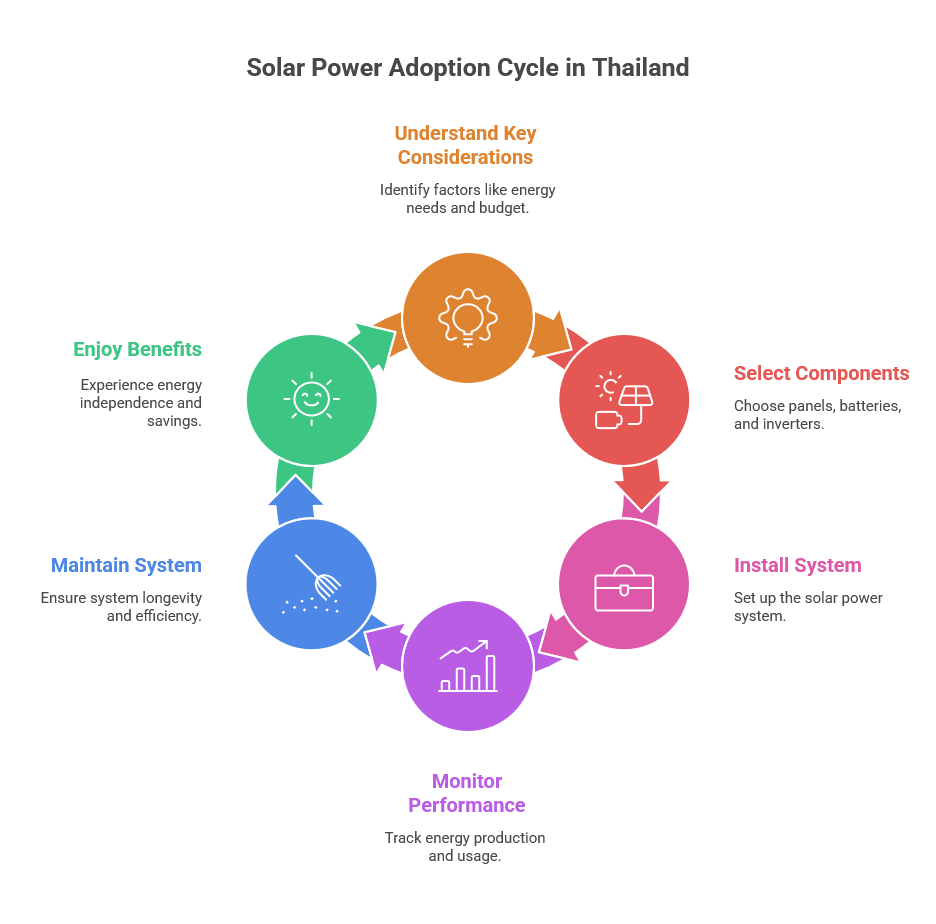
Before committing to an off-grid solar system in Thailand, it’s essential to assess your energy consumption to determine the system size that best suits your needs. Homes in rural locations typically have lower energy requirements compared to urban areas, making it easier to go fully off-grid. In these situations, a smaller solar array and fewer batteries may be sufficient. However, if you plan to power larger appliances or run a commercial property, you’ll need a more robust solar system. Larger systems require a greater number of solar panels to capture more sunlight, along with increased battery storage to store excess power for cloudy days or nights. It’s also important to consider seasonal variations in sunlight, particularly during the rainy season, to ensure that your system is designed to meet your energy needs year-round. Careful planning will help guarantee that your solar power system can provide reliable, uninterrupted energy.
Calculating the Cost of Going Off-Grid in Thailand
One of the primary considerations when deciding to go off-grid with solar power in Thailand is the cost. The price of setting up an off-grid solar system can vary greatly, depending on the size of the system and the type of equipment selected. Monocrystalline solar panels, which offer the highest efficiency, typically come with a higher price tag. However, they are more effective in converting sunlight into energy, making them ideal for those with limited space. Alternatively, polycrystalline and thin-film solar panels are less expensive, but they may not be as efficient. Beyond the panels themselves, it’s important to consider additional components like solar battery storage, solar inverters, and solar charge controllers. These components ensure that the energy generated is stored and regulated properly, and they add to the overall cost of the system. When planning an off-grid solar setup in Thailand, budgeting for all these elements is crucial for a successful installation.
Solar Battery Storage: A Key to Off-Grid Power
To go fully off-grid with solar power, efficient energy storage is crucial to ensure a continuous supply when sunlight is unavailable. In Thailand, solar battery storage is an essential component for anyone seeking energy independence. The most commonly used storage systems are deep cycle batteries, which are specifically designed to provide consistent power over extended periods. These batteries store the excess energy generated during the day for use at night or during periods of low sunlight. The required number and size of batteries depend on your household or business energy consumption, as well as the overall capacity of your solar power system. For larger energy demands, more batteries will be needed to ensure a stable power supply. As the efficiency and affordability of solar storage solutions continue to improve, solar battery storage in Thailand becomes an increasingly reliable option for those looking to achieve sustainable, off-grid living.
Solar Power Systems for Homes vs. Commercial Use
Whether you’re aiming to power a sustainable home in Thailand or a commercial property, off-grid solar solutions can be customised to fit various needs. Residential properties often require smaller solar power systems, as energy consumption is generally lower. In contrast, businesses, resorts, and larger commercial operations may need much larger solar arrays to meet their higher energy demands. Despite the scale, even larger properties stand to benefit from off-grid solar systems, particularly in regions where access to the national grid is either unreliable or completely unavailable. For these properties, an off-grid setup offers energy security, reducing reliance on the grid and ensuring a constant, reliable power supply. Off-grid solar systems in Thailand also provide a sustainable and cost-effective way to meet energy needs, as they can significantly reduce electricity bills and help businesses and homeowners contribute to a greener, more eco-conscious environment.
Challenges of Off-Grid Solar Power in Thailand
While solar energy in Thailand offers a promising solution for off-grid living, there are challenges to consider. One of the primary hurdles is the reliability of solar power during the rainy season or on cloudy days, which can reduce energy production. To overcome this, it’s important to invest in an appropriately sized solar array and adequate battery storage to ensure continuous energy availability, even during periods of low sunlight. Another challenge is the initial cost of installing a solar power system, which can be a significant investment for many. The costs of solar panel installation in Thailand as well as the battery storage can add up, especially for larger systems. However, despite the upfront expense, the long-term benefits often outweigh the initial financial burden. Over time, savings on electricity bills and increased energy independence can make solar energy a highly cost-effective solution for those looking to embrace sustainable living in Thailand.
Solar Energy Incentives and Regulations in Thailand
Thailand has introduced a range of solar incentives to promote the adoption of renewable energy, particularly solar power. The Thai government offers solar grants, subsidies, and tax incentives for both residential and commercial properties that choose to install solar energy solutions. These initiatives aim to make solar power more accessible and affordable, supporting the country’s transition to clean energy. However, it’s essential to familiarise yourself with the solar regulations in Thailand, as certain regions may require specific permits for off-grid solar systems. Compliance with local regulations ensures a smoother installation process and avoids legal issues down the line. Additionally, it’s wise to stay informed about Thailand’s energy development plan and renewable energy targets, which are subject to change. These policies often evolve to encourage greater renewable energy adoption, and new incentives or regulations may be introduced to further support the growth of solar energy in Thailand.
Environmental Benefits of Off-Grid Solar Power in Thailand
Going off-grid with solar power provides more than just energy independence—it also plays a crucial role in environmental conservation. By harnessing the sun’s energy, you drastically reduce your carbon footprint, contributing to a cleaner, greener planet. Solar energy is a renewable resource that doesn’t produce harmful emissions, unlike traditional fossil fuels. This shift towards clean energy is vital in the fight against climate change and environmental degradation. For Thailand, this move aligns with the country’s commitment to its sustainable development goals and its efforts to reduce dependence on non-renewable resources. The use of solar power directly supports Thailand’s ambition to transition to a more sustainable energy system, decreasing air pollution and improving overall environmental health. As the world faces increasingly severe environmental challenges, adopting solar energy is one of the most effective ways individuals and businesses can make a positive impact on both the local and global environment.
Building an Off-Grid Community in Thailand
An exciting trend in Thailand is the rise of off-grid communities, where sustainable living is at the core. These communities are designed to reduce environmental impact by relying on solar power and other renewable energy sources. By pooling resources and sharing energy solutions, residents can create a self-sufficient, eco-friendly environment that doesn’t depend on external energy providers. This collaborative approach fosters a sense of community while promoting sustainability and energy independence. These off-grid living spaces often incorporate smart design, water conservation techniques, and eco-friendly building materials, making them a model for sustainable development in Thailand. This movement is gaining momentum as more people seek alternatives to traditional energy grids, particularly in rural areas where access to electricity is limited. For those looking to live more consciously and reduce their carbon footprint, these off-grid communities in Thailand offer a unique and fulfilling way of life, aligning with both environmental and personal goals.
Final Thoughts …
The future of solar energy in Thailand is bright, with immense potential for off-grid living and self-sufficient power solutions. As solar technology advances and the cost of solar panels and battery storage continues to decrease, more people in Thailand are expected to adopt solar power systems for both residential and commercial use. Thailand’s abundant sunlight, coupled with supportive government policies and incentives, creates an ideal environment for those looking to achieve energy independence. Whether in rural areas or remote resorts, the transition to off-grid solar power is becoming more accessible. For those passionate about eco-friendly living and reducing their environmental footprint, off-grid solar offers a sustainable and cost-effective solution. With the combination of natural resources and growing infrastructure, Thailand is poised to lead in the solar energy revolution, providing residents and businesses with the opportunity to embrace a greener, more self-sufficient future. If you are curious to learn more or have questions then contact us or give us a call on +66 82 704 6939 and we will be happy to chat through the best options for you and your situation.
FAQs
What is off-grid solar power?
Off-grid solar power refers to electricity generated by solar panels that is not connected to a public utility grid. These systems operate independently, typically storing excess energy in batteries for use when the sun isn’t shining.
Why choose off-grid solar in Thailand?
Off-grid solar in Thailand offers energy independence, eliminates electricity bills, provides power to remote areas without grid access, and reduces environmental impact by using clean, renewable energy.
Are there specific regulations for off-grid solar in Thailand?
Unlike grid-tied systems which require permits for connecting to the national grid, standalone off-grid systems generally do not require specific government permits. However, it’s always wise to check with local building codes and consult with a reputable installer.
What is the average lifespan of an off-grid solar system in Thailand?
Solar panels typically last 25-30 years or more. Inverters usually have a lifespan of 10-15 years, while batteries vary significantly, from 5-15 years depending on type, quality, and usage.
Can off-grid solar power my entire home in Thailand?
Yes, an off-grid solar system can power an entire home in Thailand, including high-consumption appliances like air conditioning, if it is appropriately sized with sufficient solar panels and battery storage capacity to meet your energy demands.
What is the role of batteries in an off-grid solar system?
Batteries are crucial for off-grid systems as they store excess solar energy generated during the day. This stored energy is then used to power your home during the night, on cloudy days, or when solar generation is low.
What are the different types of batteries used for off-grid solar?
Common battery types include lead-acid (flooded, GEL, AGM) and lithium-ion (LiFePO4 being the most popular for solar). Lithium-ion batteries offer longer lifespans, higher efficiency, and less maintenance but come at a higher upfront cost.
How is an off-grid solar system sized for a home in Thailand?
System sizing involves a detailed energy audit to determine your daily electricity consumption (in Watt-hours or Kilowatt-hours). This dictates the number of solar panels needed, the capacity of the battery bank, and the appropriate inverter size.
Is off-grid solar reliable during Thailand's rainy season?
While solar generation is reduced during the rainy season due to less sunlight, a properly sized off-grid system with adequate battery storage can maintain power. Some systems may include a backup generator for extended cloudy periods.
What maintenance does an off-grid solar system require?
Maintenance typically involves cleaning solar panels periodically to remove dust and debris, checking battery connections, monitoring system performance, and ensuring no shading issues on the panels.
Can I gradually transition to off-grid solar in Thailand?
Some homeowners start with smaller off-grid systems for critical loads and expand over time. However, a fully integrated off-grid system is often designed as a complete unit for optimal efficiency and performance.
What are the key differences between off-grid and grid-tied solar?
Off-grid systems are independent and store power in batteries, suitable for remote locations. Grid-tied systems are connected to the utility grid, often feeding excess power back for credits, and don’t require batteries for primary function.
Are there incentives or subsidies for off-grid solar in Thailand?
While Thailand has promoted renewable energy, specific government incentives or subsidies are more commonly targeted at grid-tied solar farms or businesses. Direct subsidies for residential off-grid systems are less common but policies can change.
How does tropical climate affect solar panel performance in Thailand?
High temperatures in tropical climates like Thailand can slightly reduce the efficiency of solar panels. However, modern panels are designed to perform well in such conditions, and the abundant sunlight still makes solar highly viable.
Can I integrate a backup generator with my off-grid solar system?
Yes, integrating a backup generator is a common and highly recommended practice for off-grid systems, especially for larger homes or those requiring higher reliability. The generator can kick in automatically to charge batteries during extended low-sun periods or high demand.
What is the payback period for an off-grid solar system in Thailand?
The payback period varies widely based on initial cost, your current electricity consumption, and the rising cost of grid electricity. It can range from 7 to 15 years or more, considering the longevity of the system.
Where can I find reliable off-grid solar installers in Thailand?
Look for installers with a proven track record, good customer reviews, relevant certifications, and expertise in off-grid system design. Ask for references and detailed proposals.
Is off-grid living more expensive in the long run in Thailand?
While the upfront cost is higher, eliminating monthly electricity bills can lead to significant long-term savings. The cost of batteries is a key factor, and their replacement cycles should be factored into long-term financial planning.
Can off-grid solar increase property value in Thailand?
For properties in remote areas or those seeking eco-friendly features, a well-designed and reliable off-grid solar system can certainly be an attractive selling point and potentially increase property value.
What is the process for installing an off-grid solar system?
The process typically involves: energy audit and load assessment, system design, component selection, quotation, site preparation, installation of panels, wiring, battery bank, and inverter, followed by commissioning and testing.
Thanks for this clear guide to going off-grid in Thailand. I especially appreciate the focus on environmental benefits like reducing carbon emissions and saving money long-term. The breakdown of solar inverter choices and maintenance tips fits perfectly with Thailand’s sunny climate. I’m curious if there are any government incentives or subsidies available for residents who want to switch to solar—would love to see a follow-up on that!
Thanks for the reply, great idea will look at creating a guide for Government incentives and subsidies for Thailand
This article made my solar research so much easier! The info on batteries and installation in Thailand is spot on for beginners. Knowing the local regulations and finding reliable installers is key. Thanks for simplifying off-grid solar power for homeowners and expats! 👍
Great tips on managing energy and efficient appliances in off-grid homes. This article also smartly highlights current solar trends and trusted panel brands in Thailand. Going solar is not only about savings, it’s a move towards sustainable living and energy independence.
What a fantastic and thorough overview of off-grid solar power options in Thailand! The combination of battery storage with solar panels to achieve year-round energy independence is truly essential, especially given the rising demand for renewable energy solutions. As someone planning to relocate to rural Thailand, this guide provides invaluable practical advice that helps make the idea of reliable, grid-free electricity a realistic goal. The insights on installation and system components are especially helpful for anyone new to solar power.
Been thinking to go off grid for a while now, do you have more information perhaps on costs?
Thanks for the reply and yes will try and create a post on costings and prices great idea
This article really caught my attention as someone who is passionate about sustainable travel and eco-friendly lifestyles. The rise of off-grid solar power in Thailand is exciting because it empowers locals and tourists alike to reduce their environmental impact while enjoying energy independence. I’ve visited several remote resorts and eco-communities in Thailand that use these systems, and it’s impressive how technology like solar panels, inverters, and battery storage can work together to maintain a reliable energy supply even in areas far from the city. I also appreciate the deep dive into governmental incentives, making this green transition more affordable. For anyone considering a greener way of life or investing in renewable energy, this post is a valuable starting point with practical and inspiring information.
Really eye-opening post on off-grid solar power in Thailand. I especially appreciate the focus on the practicality of going fully off-grid, not just the environmental benefits. Living in a rural Thai village myself, I’ve seen firsthand how solar installations can transform daily life by providing reliable electricity where the grid often fails. The section on battery storage really hit home — without adequate battery banks, off-grid systems wouldn’t meet energy demands during rainy or cloudy days. Also, the evolving solar policies and incentives from the Thai government have made these technologies more affordable and accessible, encouraging more widespread usage. This article offers a thorough and balanced view, making it easier for anyone interested in self-sufficient, sustainable living to understand what’s involved.
Off-grid solar is the future! But can’t ignore the upfront installation costs that can be high for some – especially with monocrystalline panels and batteries. Its def worth it in the long run tho coz electric bills get slashed and ur carbon footprint goes way down. Good thing theres gov support and subsidies too which help a lot for residential projects.
I’ve been on the fence about installing off-grid solar, thought it might not be reliable during storms or the wet season. But this article explains the importance of sizing your system with battery capacity and panel quantity to cover those times. Really appreciate the clear breakdown of cost factors and system components. Anyone in Thailand looking for renewable energy solutions should read this.
Having overseen solar energy installations in Southeast Asia, I can attest to the transformative potential of off-grid solar energy systems in Thailand’s rural and island regions. The article rightly highlights that solar panels paired with high-capacity battery banks form the backbone of these systems. The choice between monocrystalline and polycrystalline panels can significantly impact efficiency and initial costs; monocrystalline panels, though pricier, provide better power conversion in limited spaces—ideal for residential rooftops in urban areas like Bangkok and Chiang Mai. Battery technology is evolving rapidly. Lithium-ion batteries currently dominate due to their superior cycle life and round-trip efficiency (~90%), but the requirement for climate-controlled battery enclosures to protect from humidity and heat must not be overlooked. Moreover, system design should incorporate an inverter of adequate capacity with pure sine wave output to support sensitive electronics. It is also essential to consider local regulatory requirements and ensure all installations comply with Thai electrical codes and permit regulations to guarantee safety and longevity. The article’s mention of government incentives and subsidies is important, as these financial supports are accelerating adoption rates and making off-grid solar more accessible to Thai households and business ventures seeking self-sufficiency and environmental responsibility. 🤩
Solar power in Thailand is growing so fast due to all the sun we get all year round. The govt’s grants and incentives make it easier to invest, and those new battery tech improvements r great. I’m happy people can now choose off-grid solar to escape unreliable grid power in remote areas. Greener living and energy freedom is a win-win!
As someone who has lived in Thailand for several years and extensively worked in renewable energy projects, I found this article to be an excellent overview of off-grid solar power viability in tropical climates. The integration of photovoltaic (PV) systems with deep cycle lithium-ion battery storage is crucial for ensuring uninterrupted power supply, especially given Thailand’s unique weather patterns. It’s important to size the solar array to account for seasonal irradiance variations, particularly during the monsoon months when sunlight is significantly diminished.
Additionally, employing advanced solar charge controllers with maximum power point tracking (MPPT) technology increases energy harvest efficiency, which maximizes battery charging. In my experience, hybrid systems that combine solar power with diesel generators as backup can offer a more robust solution for remote Thai communities. Also notable is the emerging smart meter technology deployed to manage load control and optimize energy consumption patterns. Implementing these technical nuances ensures sustainable and reliable autonomy from the national grid. I appreciate this article’s focus on battery operation thresholds and lifespan, as battery degradation is a critical factor affecting overall system performance and return on investment.
Been researching solar setups in Thailand for a remote resort project and this blog helped clarify a lot. The off-grid systems with battery storage are crucial when you’re far from the grid, especially in places like Chiang Rai. One challenge is definitely rainy season, but with enough batteries and quality panels, it can still be reliable. Thanks for a well-rounded and insightful post on solar energy solutions here.
This article covers all the important aspects of off-grid solar power perfectly. I liked how it broke down the equipment needed—solar panels, deep cycle batteries, inverters, and charge controllers. With the solar rooftop incentives and tax rebates from the Thai government, it’s an ideal time for homeowners around Bangkok and Chiang Mai to switch over. This sustainable and cost-effective energy solution really helps reduce electricity bills and carbon emissions. 👍
Really fascinating read about off-grid solar in Thailand. The consistent tropical sunshine and government subsidies make solar energy a super attractive option for those wanting energy independence, especially in rural spots with unreliable grids. It’s also great to see focus on battery storage as that’s a critical piece to making solar work 24/7. Anyone thinking about off-grid living or renewable energy here should definitely consider rooftop solar PV systems.
Good overview, thanks. I’ve been living off-grid in Pai for three years using a diesel generator as my primary power source, which is far from ideal from both a cost and noise perspective. I generate about 60 to 70 litres of diesel a month during the rainy season, which adds up quickly and the fumes aren’t great when you have guests staying.
I’ve been seriously looking at pairing solar panels and battery storage with the generator rather than replacing it entirely. The idea being that solar handles the bulk of the load through the dry months, the batteries carry overnight and early morning, and the generator only fires up during extended bad weather when the battery bank drops below a certain level. Is that kind of hybrid solar-generator setup something you install and configure? I wasn’t sure if the solar inverter and the generator could be set up to work together automatically without someone manually switching between them.
Roberto, yes, exactly the kind of setup you’re describing is very much something we design and install, and it’s actually one of the more practical configurations for locations like Pai where the rainy season is prolonged and heavy cloud cover can last for days at a stretch.
What you’re describing is typically called a solar-generator hybrid or solar-diesel hybrid system. A good hybrid inverter will manage the automatic handover between the solar/battery supply and the generator without any manual intervention needed. You set a battery state-of-charge threshold, say 20 or 25 percent, and when the battery bank drops to that level, the inverter automatically starts the generator, charges the batteries back up to a preset level, then cuts the generator and returns to solar/battery supply. Done properly, your generator runs for short, efficient bursts at full load, which is much better for the engine than extended low-load running, and your diesel consumption drops by a good margin.
Given your current 60 to 70 litres a month, the savings from that reduction alone would cut your payback period noticeably. We’d be happy to do a remote assessment based on your current consumption figures before you commit to anything. Just get in touch via the contact page or call us on +66 82 704 6939 and we can take it from there.
My parents installed solar panels on their farmhouse last year and honestly I didn’t understand half of what was involved until I read articles like this one. The electricity bills were a constant stress. Summer months especially, running the water pump and fans all day was expensive. Since the installation the bills have dropped by more than half and they’ve stopped worrying about power cuts during storms.
Sustainable living isn’t just a trend here, it actually makes financial sense for rural families. Glad to see more information about solar energy options in Thailand in Thai and expat publications alike. Will be sharing this with friends who are thinking about making the switch to renewable power.
Running a small guesthouse on Koh Phangan so this article was very relevant to me. Island properties are a slightly different situation to mainland Thailand. The grid connection here is shared across the whole island and we get outages several times a month, sometimes for half a day at a time. Guests don’t appreciate it, to put it mildly.
We’ve been looking seriously at going fully off-grid for the past six months and the thing that’s complicated our planning is the salt air environment. A few contractors we spoke to didn’t seem to think it was much of a factor, but from what I’ve read that’s wrong. Battery enclosures and inverter housings need proper IP ratings for coastal installations, otherwise you’re dealing with corrosion failures well before the warranty runs out.
Would be really helpful if there was a future article specifically covering solar installations for island and coastal properties in the Gulf and Andaman regions. I imagine there are a fair few resort and villa owners in the same position as us who’d benefit from that kind of focused guide on renewable energy solutions for coastal environments.
We’ve been running a fully off-grid photovoltaic setup at our place outside Chiang Mai for just over two years now, so I can share some real-world experience rather than theory.
Before we committed, I was genuinely worried about whether a standalone solar system could handle the monsoon months. What we found was that the key isn’t trying to squeeze maximum output from the panels during bad weather. You need enough battery capacity to carry you through three or four consecutive cloudy days without needing to fire up a backup generator. We ended up going with a 20 kWh LiFePO4 battery bank, which turned out to be the right call. Lithium iron phosphate handles the heat here far better than the lead-acid options we looked at, and we haven’t had to touch them beyond a basic quarterly check of connections.
One thing I wish someone had told us upfront: do a proper energy audit before you even start talking to installers. We thought we had a reasonable idea of our daily consumption, but when we actually logged everything: the air conditioning runtimes, the water pump, fridge, all of it. The real number was about 40% higher than our estimate. That gap changes your panel array size, your battery bank size, and your whole budget. Our solar charge controller (we went with an MPPT model) has been excellent for keeping charging efficient during partial cloud cover, which matters a lot up here.
The payback period is longer for a full off-grid system than a grid-tied one since you’re also paying for all the storage rather than just using the grid as backup. Realistically we’re looking at 8 to 9 years to break even. But we have no electricity bill at all, which still surprises me, and the property is genuinely self-sufficient in a way that grid-tied solar simply isn’t. For anyone in a remote location in northern Thailand where PEA supply can be unreliable at the best of times, I’d say the case for going fully off-grid is stronger than most people realise.
really good artical thank you! i been wondering about the air conditioning tho because in thailand you cant really go without it during summer months. is it actually possible to run aircon on a off grid solar system or does the energy consumption make it to much for the batteries?artical · to much · a off also how many panels would you need roughly for a small house with 2 aircon units? would love to no more about this before i contact anyone for a quote
Good question. Running air conditioning off-grid in Thailand is possible, but it does require careful system sizing. Air conditioning units are typically the single largest energy draw in a Thai home, so they’re the most important thing to account for in your energy audit before anything else.
For a small house with two standard split-unit air conditioners (roughly 9,000 to 12,000 BTU each), you’d generally be looking at a solar array in the region of 8 to 12 kW combined with a battery bank of at least 15 to 20 kWh to give you reliable overnight and early morning coverage. The exact numbers depend on how many hours per day you’re running them and how efficient the units are. Newer inverter-type AC units use considerably less power than older models.
We’d recommend a site visit and a full load assessment before committing to any specification, as every property is a little different. Feel free to give us a call on +66 82 704 6939 or drop us a message through the contact page and we can talk through your situation in detail, with no obligation at all.