

Installing Solar Hybrid Systems in Thailand
Electricity bills in Thailand have continued to rise, and power outages remain a common frustration for households and businesses. These challenges have encouraged more people to look for smarter energy options. A hybrid solar system in Thailand with solar battery storage offers a way to cut costs and keep the lights on during blackouts.
This guide explains the main solar benefits, including lower electricity costs, long-term savings, and greater energy independence. It also covers how these systems work, the costs involved, and why more homeowners and businesses in Thailand are choosing them as part of their move to cleaner energy.
What Is a Hybrid Solar System with Battery Storage?
A hybrid solar system is a power setup that combines solar panels with battery storage. The panels generate electricity from the sun, and any extra power that is not used immediately goes into the batteries for later use. The system also connects to the national grid, which provides backup if the solar supply is not enough.
This mix of grid connection and batteries makes it different from other setups. An off-grid system runs completely on solar energy with no access to grid electricity. An on-grid system uses solar panels but has no storage, so all excess power goes straight to the grid. A hybrid design combines the best parts of both, giving flexibility and backup.
Key terms include solar PV with battery backup Thailand, solar hybrid system with battery, and photovoltaic battery system. These terms describe the same idea: solar energy that can be stored for later, giving homes and businesses more control over their power.
For houses, a home battery storage system in Thailand adds security by keeping power during outages. For businesses, hybrid energy storage in Thailand reduces reliance on the grid and makes energy costs easier to predict. In both cases, the system delivers reliability and independence.
How a Hybrid Solar System Works
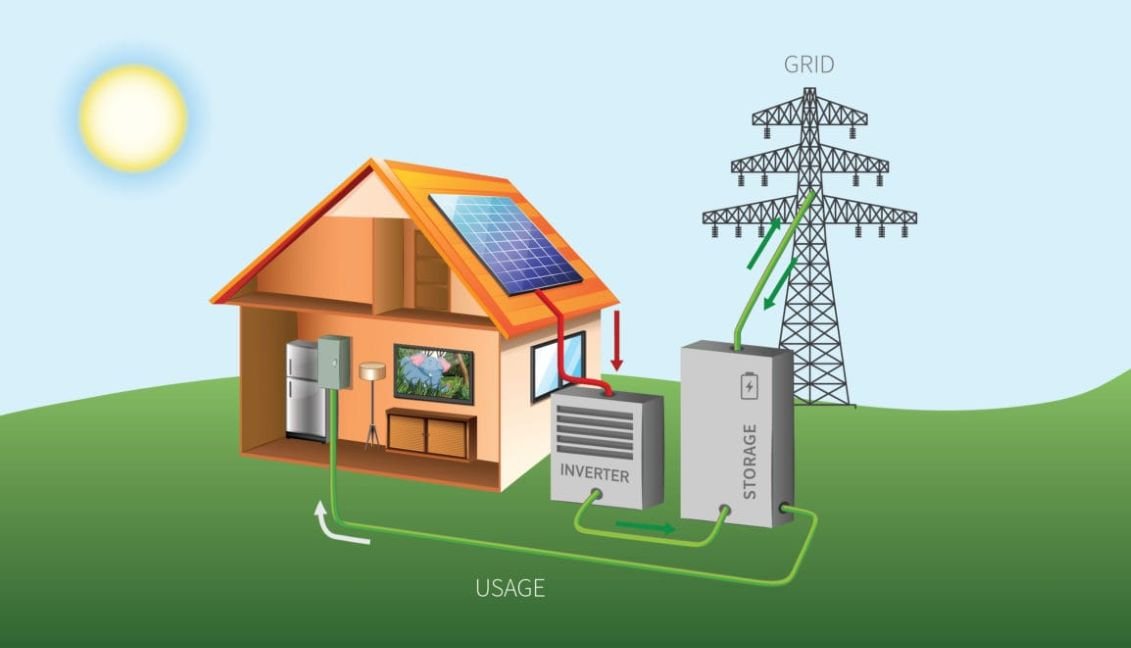
The process is simple and easy to follow. Solar panels on the roof capture energy from the sun. That energy then passes through an inverter, which changes it into usable electricity for the home or business. If there is more power than needed, it flows into the batteries for storage.
When the sun is not shining, the stored energy in the batteries supplies power. If the batteries run low, the grid steps in to cover the demand. This gives households the benefit of both solar independence and grid reliability.
Essential parts of the setup include a solar charge controller to regulate energy flow, and a solar inverter with battery backup to switch between different sources smoothly. Together, these parts make the system reliable and easy to use.
Imagine a diagram showing panels feeding energy into an inverter, then splitting into a battery and the household, with a backup connection to the grid. That image explains the flow clearly and shows how the system works day and night.
Key Benefits of Hybrid Solar Systems in Thailand
One of the biggest reasons families and businesses choose a hybrid solar system in Thailand is greater energy independence. Power cuts are still common in many parts of the country, and blackouts can disrupt homes and workplaces. A hybrid setup offers steady supply by storing excess solar energy for later use. This storage gives protection against outages and builds Thailand energy security. With solar power for blackout protection, households can carry on with daily tasks even when the grid fails.
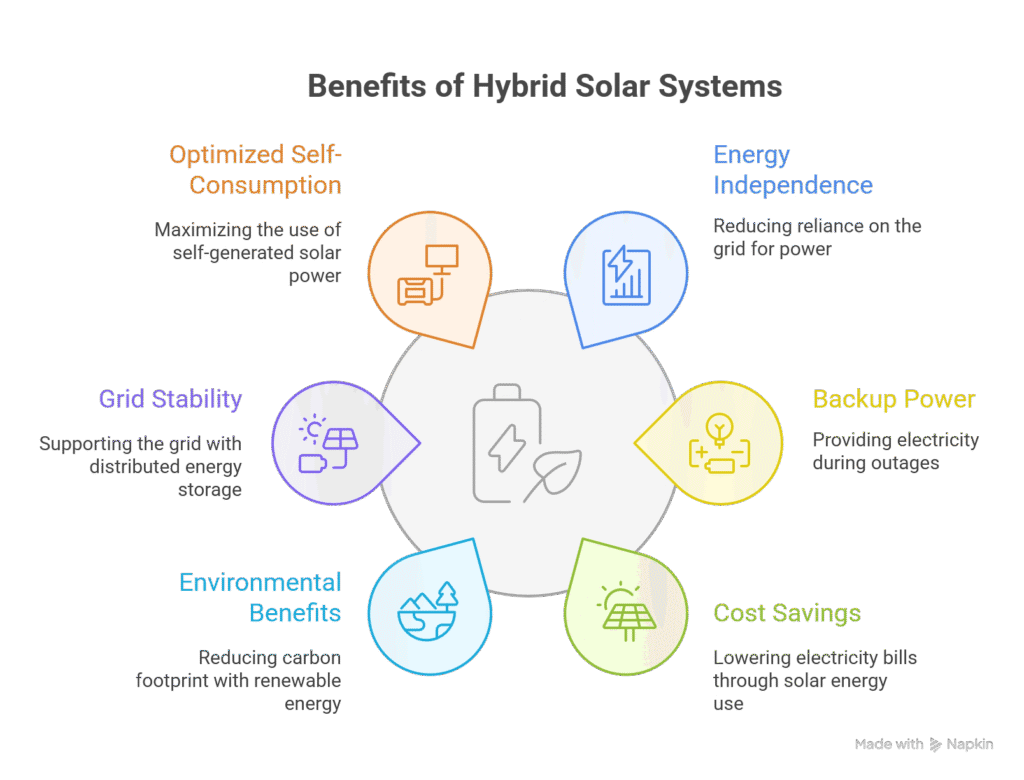
Savings are another strong benefit. Grid electricity prices continue to climb, which makes solar systems more attractive each year. A hybrid design cuts bills by letting homes use more of their own power instead of buying from the grid. The ROI from solar hybrid systems becomes clear after a few years, as reduced bills add up. For families, this means more money left in the household budget. For businesses, the advantage is more predictable running costs. These systems bring clear solar hybrid cost savings in Thailand over the long term.
Sustainability also matters. Using a renewable energy source lowers emissions and helps reduce dependence on fossil fuels. Choosing solar supports the Thailand clean energy transition, which is a national priority. A hybrid design also fits with green technology Thailand goals, providing cleaner air and a smaller carbon footprint.
Another advantage is reliable backup power. Rural areas face long outages, while even city centres can lose power at times. A hybrid system solves this problem by storing power for emergencies. With solar backup power and solar for power outages, homes and businesses stay connected. This benefit adds peace of mind and ensures daily life is less disrupted by energy shortages.
Hybrid Solar System Costs in Thailand
The price of a solar hybrid system in Thailand depends on several factors. The first is system size. A small residential hybrid solar system costs less than a large commercial project. Larger systems need more panels and bigger batteries, which increases the total.
Battery capacity also makes a difference. High-capacity batteries cost more but allow longer use without grid support. The choice of inverter is another factor, with the best hybrid solar inverter models in Thailand providing better efficiency and longer service life.
Installation costs vary by region. Urban areas may be cheaper due to easier access and shorter set-up times, while rural areas can be more expensive. Typical costs for a solar panel and battery combo in Thailand can range from moderate packages for small homes to high-end systems for businesses. Some suppliers offer a solar hybrid package Thailand with panels, batteries, and inverters included, while others price each item separately.
The hybrid solar panel price in Thailand also depends on brand and quality. Good quality panels and batteries are more reliable, so many households see them as a worthwhile investment.
There are financial support options as well. Solar incentives in Thailand and Thai solar and battery grants reduce upfront costs for households and businesses that choose renewable energy. These schemes make systems more affordable and encourage more people to switch.
Helpful article. I now understand how hybrid solar works and why it saves money on electricity in Thailand.
Thanks so much! Really happy it clicked for you. If you ever want to see what a system would look like for your place, just drop us a quick message – happy to run some numbers for you.
Very detailed article on solar hybrid system with battery setups perfect for Thailand’s climate. The part explaining how this differs from off-grid and on-grid systems helped me understand that a hybrid energy storage Thailand system is ideal for many homes here. It gives clean, backup power and helps reduce electricity bills. The writing was simple enough to follow without tech jargon but gave solid reasons why the ROI makes sense, especially with the solar incentives Thailand now offered. I’m confident these systems support cleaner energy and safety for my family.
Appreciate you taking the time to write such a nice comment! Glad the explanation made sense and that the ROI part stood out. We’re seeing more and more families in Thailand making the switch now because of exactly those reasons. Would love to help you with a free no-obligation quote whenever you’re ready.
Thanks for explaining the costs clearly. This helps with budgeting for my solar plus storage system.
You’re welcome! Budgeting is the big question everyone has, so I’m glad it helped. We can give you a very accurate quote based on your roof size and daily usage – just let us know your location and average monthly bill and we’ll sort it out for you.
Nice simple explanation. I didn’t know battery storage could protect from blackouts so well in Thailand’s grid.
Haha yeah, that’s the part most people are surprised by! The switch-over is so fast you barely notice the lights flicker. Blackouts are becoming more common, so the backup is a real game-changer here. Any questions about how it would work at your house?
As an expat running a small business up north, I was looking for clear info on solar PV with battery backup Thailand, and this post was spot on. The step-by-step on how the hybrid solar system works, especially the role of the inverter and solar charge controller, was super helpful. The cost details matched what I’ve been quoted locally. With the government’s solar incentives and rising power prices, this hybrid system looks like a smart way to save money and cut down on power interruptions. The added bonus is reducing my carbon footprint, which is important to me.As an expat running a small business up north, I was looking for clear info on solar PV with battery backup Thailand, and this post was spot on. The step-by-step on how the hybrid solar system works, especially the role of the inverter and solar charge controller, was super helpful. The cost details matched what I’ve been quoted locally. With the government’s solar incentives and rising power prices, this hybrid system looks like a smart way to save money and cut down on power interruptions. The added bonus is reducing my carbon footprint, which is important to me. 🤔
Thanks mate – really glad it hit the mark! We’ve installed quite a few hybrid systems for businesses up north and the owners all say the same thing, no more lost stock or closed doors during outages. If you want, I can send you some real examples of systems we’ve done in your area.
Useful info! I like how it explains the different solar system types. Great for anyone thinking of switching to solar here.
Thank you! That’s exactly why I wrote it – so people can see which system actually fits their situation. If you’re thinking about going solar, I’m happy to walk you through the options for your specific home.
Good overview of hybrid solar system Thailand and battery benefits. Makes me want to go solar sooner! 🤔
Haha mission accomplished then! 😄 Whenever you’re ready to take the next step, we’re here. No pressure, just honest advice.
I found this guide on the hybrid solar system Thailand really useful. The explanation of how the solar hybrid system with battery works makes it easy to understand why it’s a smart investment for homes here. With rising electricity costs and frequent blackouts, having a solar battery storage Thailand setup offers peace of mind and true energy independence Thailand. I’m thinking of adding a battery to my existing solar panels because the long-term savings on electricity bills and backup power during outages really make a difference. Also, staying grid-connected while storing power means less worry in rainy seasons. This article covers the main benefits clearly, helping people decide confidently.
Really appreciate the kind words! You nailed it – energy independence is the biggest reason more Thais and expats are choosing hybrid systems right now. Especially with the rainy season blackouts. Let me know if you’d like us to check your roof and give you some realistic numbers.
im not so sure about all this new technology. what happens when the batterys die? are they expensive to replace? and what about the maintenance? it seems like a lot of hassle. i have been using the grid my whole life and it has been fine for me. maybe this is good for some people but i think i will stick with what i know. just my two cents.
Totally fair question! Batteries do eventually need replacing, but good LFP ones last 10–15 years with almost zero maintenance. Replacement cost is usually around 30-40% of the original system price after that time. Happy to explain the real numbers for your situation if you want – no sales pitch, just facts.
I live in a condo in Bangkok, so I’m not sure if a hybrid solar system is an option for me. But I’m really interested in the idea of being more energy independent. Are there any solutions for people living in apartments or condos? Maybe some kind of community solar project? I’d love to be able to use clean energy and reduce my reliance on the grid. Any information on this would be great.
Great question! For condos it’s trickier because of building rules, but there are a few options:
Shared/community solar projects (we’re involved in a couple)
Balcony or small rooftop micro-systems
Or even just a battery backup system without panels
Would you like me to send you what’s possible in Bangkok condos right now?
Excellent technical breakdown of hybrid solar systems. I appreciate the detail you went into about how the battery storage works and the benefits of being able to use your own generated power. It’s a much more efficient system than a standard grid-tied setup. I’m an engineer myself, and I’ve been following the advancements in solar technology for years. It’s great to see that these systems are becoming more accessible and affordable for homeowners in Thailand. Keep up the great work!
Thanks! Coming from an engineer that means a lot. The tech has moved so fast in the last couple of years. If you ever want to geek out on specs or compare different inverter/battery combos, I’m your guy.
This is a fantastic article! I’m so glad I came across it. My husband and I have been talking about getting solar panels for our home in Phuket, and this has answered so many of our questions. We were a bit hesitant about the initial investment, but when you break down the long-term savings and the benefits of having a reliable power source, it really makes sense. The fact that it’s also good for the environment is the icing on the cake. We’ll definitely be looking into getting a hybrid system installed.✨
Awesome! Phuket is one of our favourite places to install – the sunshine is perfect. When you’re ready, we can come do a proper site visit and show you exactly what the payback would look like for your house. No rush, just say the word.
Grate article, realy informative. I’ve been lookin into solar for my place in isaan, the power gose out all the time here. A hybrid system seems like the perfect solution. The battery storage is a game changer. I’m just a bit worried about the initial cost. Is there any government support or financing options available to help with the upfront investment? Any info would be much apreciated. Cheers! 👍
yes sure can review the article above we link out to some great grants and resources for financing, will also try and write an article in the future regards that as subsidies, grants and financing are somethign thats prett hot right now in Solar
This is the future! Thailand needs to embrace renewable energy more, and hybrid solar systems are a big part of the solution. It’s not just about saving money on electricity bills; it’s about protecting our planet for future generations. I’m tired of seeing the pollution from fossil fuels and the impact it has on our environment. Solar power is clean, sustainable, and abundant in Thailand. I hope more people read this article and realize the benefits of switching to solar. It’s a win-win for everyone.
Couldn’t agree more! The environmental side is what keeps me motivated every day. Thailand has so much sun, it just makes sense to use it. Thanks for the support!
A well-written and comprehensive article. As an expat living in Thailand, I’ve experienced my fair share of power cuts, and they can be incredibly disruptive. The idea of having a reliable backup power source is very appealing. I also appreciate the point about increasing property value. While that’s not my primary motivation, it’s certainly a nice bonus to consider. The environmental benefits are a huge plus for me as well. I’m keen to reduce my carbon footprint and this seems like a very effective way to do it. Does your company offer consultations in the Pattaya area? I’d be interested in getting a quote for my house…. 🤔
Hi ExpatLife we completely understand the challenges regular power cuts present and hybrid solar systems make a perfect solution for that 🙂 Yes of course we do consultations nationwide, including solar panel installations in Pattaya give us a call or contact us any time
very good information. i have been thinking about solar for my business. the power outages are a big problem for my shop. a hybrid system with battery backup would be perfect. how much does a system like this cost for a small shophouse? i need to know if it is affordable for me. thank you for the article.
We’d be happy to provide a consultation and quotation just drop us a line anytime 🙂
This is a great overview of hybrid systems. I’ve been considering solar for my home in Chiang Mai for a while now, but the unreliability of the grid has always been a concern. The battery storage aspect of a hybrid system seems to solve that problem. It’s reassuring to know that I can have a consistent power supply even during a blackout. I’m particularly interested in the cost savings aspect – with electricity prices always on the rise, generating my own power seems like a smart long-term investment. Thanks for the informative article!
Chiang Mai blackouts are no joke! The battery really does solve that headache completely. We’ve done quite a few systems up there — happy to share some real before/after electricity bill examples if you like.
As registered Plumbers in Polokwane, in South Africa we would always reccomend installing hybrid solar systems to our clients as it was the best option for the climate to be honest very similar to here in Thailand as well … its a good solid choice even if it costs a few more pence, longer term that pays off handsomely
wao this blog about sollar battery storage thailand is super usefull! i have solar panel already but bill still high becuse no batery. after reading i think LFP battery thailand is good choise for hot wether here. the payback in 5-7 year sound reasonable and blackout protection very importent for me in hua hin. going to contact solar panels thailand company for quote soon. thank you for share!
Thanks so much! Really glad the article helped.
Since you already have solar panels but your bill is still high, adding an LFP battery is a great choice – especially for Hua Hin’s hot weather and frequent blackouts.
The 5-7 year payback looks solid.
Feel free to reach out anytime for a quote – happy to help!
ขอบคุณมากครับ! ยินดีที่บทความมีประโยชน์นะครับ
มีแผงโซลาร์อยู่แล้วแต่บิลยังสูง การเพิ่ม LFP Battery เข้าไปดีมากครับ เหมาะกับอากาศร้อนที่หัวหินและช่วยกันไฟดับได้ดี
ระยะคืนทุน 5-7 ปีก็สมเหตุสมผลเลยครับ
ติดต่อขอใบเสนอราคาได้เลยนะครับ ยินดีช่วยเต็มที่! 😊
Great read! Been looking into hybrid solar system with battery storage Thailand for my house in Hua Hin and this explains everything clearly. The part about LFP battery Thailand being best for our hot weather makes total sense – no more worries about overheating like with old lead-acid ones. Self-consumption rate jumping to 80%+ is huge for cutting PEA bills. Planning to get a quote soon, thanks for the detailed guide.
Thanks so much and be happy to help and assist with any questions you’ve got for your installation, its important to get it right and no questions are to daft 🙂
Eish this post is spot on bru! Living in Hua Hin the blackouts kill me during rainy season so solar battery storage Thailand with quick switchover sounds perfect. Love the breakdown on why LFP is king here – 6000 cycles and zero maintenance? Lekker! Already slashed my electricity bill with panels, adding backup battery gonna make me fully energy independent. Top info mate, keep it coming.
Lekker bru! Love seeing comments from fellow Hua Hin people 😄 Blackouts during rainy season are the worst, right? The quick switchover on the hybrid system really does make a huge difference. If you want, I can pop round for a free check on your roof and give you proper numbers — no obligation at all.
We do this all the time in South Africa and as a professional Sparky in Cape Town we get alot of requests for solar due to the similar climate to Thailand’s and we also recommend the same that they should install hybrid systems and we also suggest when they install their geysers for their shower and water needs that they go solar. Really nice to see your article
I am looking to fit a 5kw system with batteries to my partners house she built for her mother a while back. It’s a small 2 bed 100Mish bungalow style with the low angled roofing style.
This is more of a proof of concept project as her needs are minimal, but I would like the system to be upgradeable. The average useage is no more 150- 200kw/h /month but ramps up to over double that when we arrive on the scene and to future proof it further I would like to look into the cost of having capacity to run an EV charging point with surplus energy collected and dispersed through batteries and / or direct daytime charging. The location of the house is north of Khon Kaen. Look forward to hearing your thoughts on this
Great question, and a really sensible approach treating it as a proof of concept before scaling up.
The good news is that north of Khon Kaen sits in one of Thailand’s better solar zones, so irradiance is not going to be your limiting factor. A 5kW hybrid system is a solid starting point for what you’re describing.
On the low-angled roof, don’t let that put you off too much. At Khon Kaen’s latitude (roughly 16-17°N), a shallow pitch actually performs reasonably well year-round. You lose a little efficiency versus an optimally tilted array, but Thailand’s high solar hours compensate for that. Just make sure your installer accounts for adequate airflow underneath the panels, as heat buildup on a flat or near-flat surface will chip away at output over time.
For a base load of 150-200 kWh/month, a 5kW array with around 10kWh of LiFePO4 battery storage would comfortably cover daily needs and give you meaningful overnight autonomy. When you and your partner visit and consumption doubles, the hybrid system will simply draw from the grid to top up rather than leaving anything short. A good hybrid inverter, something like a Deye or Growatt, will manage that transition seamlessly.
For the EV charging angle, this is where sizing the battery bank correctly from day one matters. I’d recommend specifying an inverter with a minimum 10kW battery expansion capacity so you can add a second battery later without replacing the inverter. Daytime direct charging via the solar array is straightforward and keeps the battery cycle count down, which extends pack life considerably.
One thing worth checking with your installer upfront is PEA’s current position on grid connection for hybrid systems in your area, as requirements can vary slightly by province.
Happy to connect you with a trusted installer in the Khon Kaen region if that would help. Just drop us a message through the contact page or on whatsapp – https://wa.me/66827046939.