

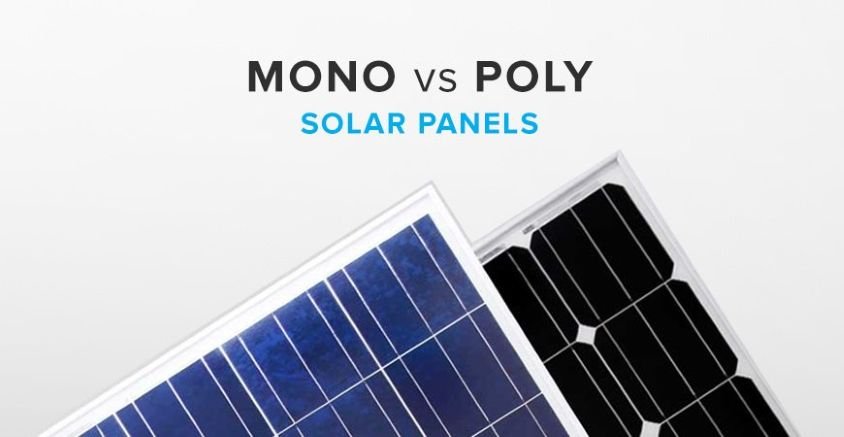
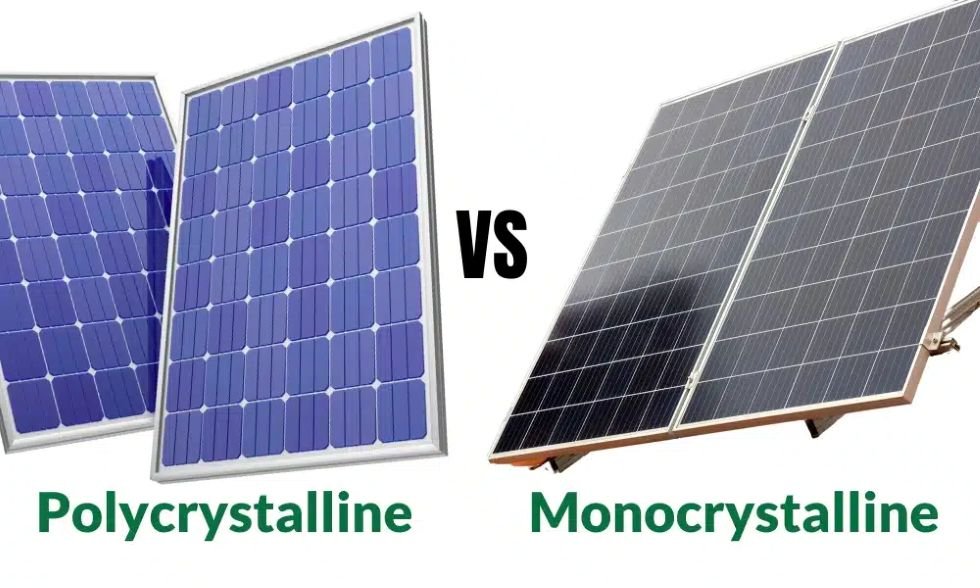
Degradation Rate of Solar Panels in Hot Climates
Solar panel degradation is a natural process that gradually reduces the energy output of the panels over time. In hot climates, this process tends to accelerate due to prolonged exposure to high temperatures and intense sunlight. Heat can cause thermal stress on the photovoltaic cells, leading to microscopic cracks and material fatigue. UV radiation also contributes to the breakdown of encapsulant materials and discoloration, both of which reduce overall panel performance and lifespan.
The degradation rate varies depending on panel type and manufacturing quality. Monocrystalline panels generally degrade at a slower rate—around 0.3% to 0.5% per year—compared to polycrystalline panels, which can degrade at about 0.5% to 0.8% annually. Over 25 years, this difference can significantly impact energy production and financial returns. In hot regions, choosing high-quality panels with heat-resistant materials and proper ventilation can help mitigate degradation and maintain higher efficiency over time.
Temperature Coefficient and Its Effect on Solar Panel Performance
The temperature coefficient of a solar panel indicates how its efficiency changes with temperature. As the temperature increases, the panel’s electrical output decreases because excessive heat reduces the voltage generated by the solar cells. The coefficient is expressed as a percentage loss per degree Celsius above 25°C, the standard testing temperature. For example, a coefficient of -0.4%/°C means that for every degree above 25°C, the panel’s efficiency drops by 0.4%.
Both monocrystalline and polycrystalline panels have temperature coefficients, but polycrystalline types generally handle heat slightly better. This makes them suitable for tropical regions like Thailand, where temperatures frequently exceed 30°C. However, monocrystalline panels, despite being more sensitive to heat, usually provide higher overall efficiency and better power output in most conditions. Therefore, while polycrystalline panels can be more stable in hot climates, monocrystalline panels remain the preferred choice when maximum performance is the main priority.
Cost vs Efficiency: Finding the Balance
When choosing between monocrystalline and polycrystalline solar panels, it’s important to consider both cost and efficiency to achieve the best value. Monocrystalline panels are made from a single crystal structure, allowing them to convert sunlight into electricity more efficiently. They perform better in low-light conditions and take up less space, making them ideal for homeowners with limited roof area or those looking for maximum energy output. However, this higher performance comes with a higher upfront cost, which may not suit every budget.
Polycrystalline panels, on the other hand, are made from multiple silicon fragments melted together, resulting in slightly lower efficiency. They generally require more surface area to produce the same amount of energy as monocrystalline panels but come at a more affordable price. This makes them a practical choice for those with larger installation areas or tighter budgets, offering a solid balance between performance and cost-effectiveness.
Solar Panel Installation Costs in Thailand
The cost of installing a solar system in Thailand varies widely based on several factors, including the type of solar panels, system capacity, installation complexity, and regional labour rates. Monocrystalline panels, known for their high efficiency and sleek design, typically come with higher upfront costs due to more advanced manufacturing processes. In contrast, polycrystalline panels are generally cheaper to produce and install, making them an attractive option for homeowners or businesses looking for a cost-effective renewable energy solution.
Additional factors influencing installation costs include roof type, mounting structure, inverter quality, and wiring requirements. In urban areas such as Bangkok or Chiang Mai, labour costs may be slightly higher than in rural provinces. On average, residential solar installations in Thailand range from 35,000 to 60,000 THB per kilowatt, depending on system size and component quality. Larger systems benefit from economies of scale, reducing the cost per kilowatt installed.
Long-Term Energy Savings with Solar Power in Thailand
Investing in solar energy in Thailand offers substantial long-term financial benefits, as the country’s abundant sunlight allows for efficient power generation throughout the year. By harnessing solar power, homeowners and businesses can significantly reduce their dependence on grid electricity, leading to lower monthly utility bills. Over time, these savings can offset the initial installation costs, making solar energy an increasingly attractive option for both residential and commercial users. Additionally, government incentives and declining solar equipment prices continue to enhance the overall return on investment.
The extent of your savings depends on the type and efficiency of the solar panels installed. Monocrystalline panels, known for their high efficiency and durability, typically deliver greater energy output and faster payback periods. However, polycrystalline panels remain a practical choice for those with larger installation areas, offering reliable performance at a lower cost. With proper design and maintenance, solar systems can provide consistent savings for decades.
Solar Panel Warranties and Lifespan
Solar panel warranties provide assurance of long-term performance and durability. Both monocrystalline and polycrystalline solar panels usually come with warranties ranging from 20 to 25 years, covering performance and manufacturing defects. These warranties guarantee that the panels will maintain a certain percentage of their original efficiency, ensuring consistent energy production over decades. The length and quality of the warranty are key indicators of a manufacturer’s confidence in the product’s reliability.
Monocrystalline panels generally have a longer expected lifespan and a stronger warranty compared to polycrystalline panels. Their higher purity silicon allows them to operate more efficiently and degrade more slowly over time. This results in better performance in low-light conditions and a more consistent energy yield throughout their lifetime. For homeowners and businesses seeking long-term energy savings and sustainability, monocrystalline panels are often the preferred choice, offering excellent returns on investment through efficiency and durability.
The Future of Solar Energy in Thailand
Thailand’s solar energy sector is entering an exciting phase of growth as technology becomes more advanced and affordable. Both monocrystalline and polycrystalline solar panels have improved in efficiency, allowing households and businesses to generate more power from the same surface area. With the falling cost of installation and maintenance, solar systems are now within reach for a wider segment of the population. These advancements are helping Thailand reduce its dependence on fossil fuels and lower greenhouse gas emissions.
Government support has been a major driving force behind this progress. Incentives such as tax benefits, feed-in tariffs, and grants encourage investment in solar energy projects. As Thailand aims to increase its share of renewable energy, solar power is expected to play a key role in achieving national sustainability goals. With continuous innovation and strong policy backing, Thailand is well-positioned to become a regional leader in solar energy adoption.
Final Thoughts …
While the debate between Monocrystalline and Polycrystalline panels often centers on efficiency and cost for standard grid-tied setups, this choice becomes even more critical when planning for energy independence. For homeowners looking to install a hybrid solar system that incorporates battery storage, the higher efficiency of Monocrystalline panels can be advantageous, as they maximize energy generation from a limited roof area, providing more power to charge the battery bank quickly. Furthermore, if your long-term goal is to go entirely off-grid for complete energy autonomy, selecting the most efficient panel type (Mono) is often recommended to ensure maximum power capture, reliability, and quicker payback on the entire system, especially where every watt counts.
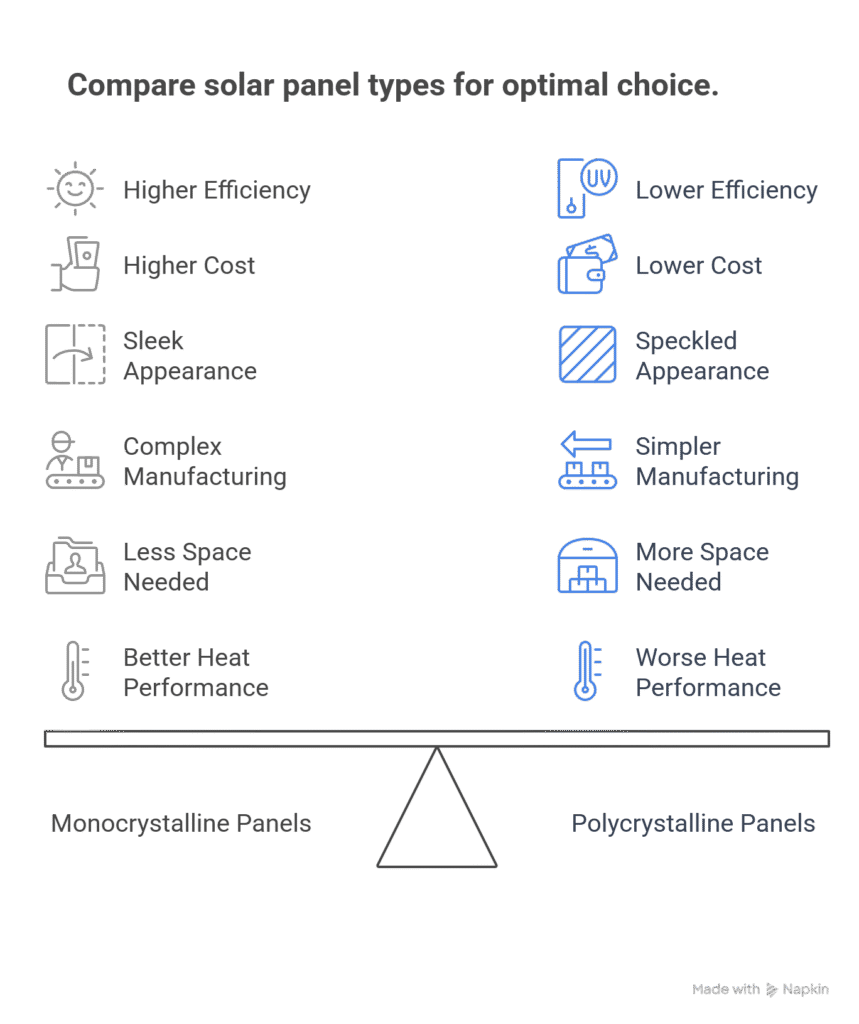
When deciding between monocrystalline and polycrystalline solar panels, it’s important to assess your energy goals, available space, and budget. Monocrystalline panels offer higher efficiency and a sleek appearance, making them suitable for homes or businesses with limited installation areas. Although they come with a higher upfront cost, their long lifespan and superior energy production can provide greater returns over time.
On the other hand, polycrystalline panels are a practical and cost-effective choice for those prioritizing affordability without compromising reliability. They perform well under standard conditions and are ideal for larger properties with sufficient roof space. Considering factors such as Thailand’s warm climate, potential shading, and maintenance requirements will help you select the most suitable system. Ultimately, both options contribute to long-term energy savings and sustainability, allowing you to harness Thailand’s abundant sunlight efficiently while reducing dependence on conventional energy sources.
If you’d like to learn more or want a friendly chat obligation free then why not call us on +66 82 704 6939 or contact us today we will be happy to help
This article nails the central dilemma perfectly: cost vs. space/efficiency. I think the key takeaway for anyone reading in Thailand is to first measure your available unshaded roof space. If you’re constrained, Mono is the only logical choice because that higher 22% efficiency lets you maximize every square meter. If your roof is enormous, then Polycrystalline becomes a highly competitive, budget-friendly option. I appreciate you focusing on the temperature coefficient too, as a stable output in this tropical heat is often more valuable than a high peak output that immediately drops when the temperature hits 40°C. Excellent breakdown of the Thai market specifics.
Interesting analysis and Good read Thanks!
I installed Mono panels last year and I can confirm what the article says about the appearance. The sleek, uniform black design looks fantastic on my villa roof—it just blends in, and the curb appeal is definitely improved. But more important than the looks is the performance during the low light hours, like early morning and late afternoon. My energy monitoring app shows they still kick out decent power even when the sun isn’t directly overhead, which is exactly where Mono panels win over Poly. The higher efficiency means my batteries get topped up quicker. For me, that little bit of extra efficiency every day really adds up over the years, making the initial investment worth every baht. 😉
Look, I get it, Mono is better. But I have a huge warehouse roof and a super tight budget. The difference in price between the two, especially when buying thousands of watts, is massive. I can get 5kW more system for the same price if I go with Poly. That extra power output, even at lower efficiency, is better than paying way more for the “best” panels. It’s about ROI. If I’m paying 10 baht less per watt, that saves me serious coin on a big project. You gotta be practical about these things. Good artical, but the cost section is the most important part for me! 🎉
Thanks for clarifying the temperature coefficient! I’m a student researching PV degradation in tropical environments and I was trying to find real-world cost comparisons. The table listing the approximate price per watt (18-30 THB for Poly) is extremely helpful for my financial modeling. It seems like Poly is the clear winner for cost-effective large-scale solar farms where land (or roof) is cheap, but Mono maintains its dominance for the urban residential market in places like Pattaya or Phuket. Can you follow up with a piece on the performance differences in low-light conditions during the heavy monsoon season? That’s another huge factor here.
Hi Dreamjili,
Thanks for the great suggestion! A monsoon season performance article is definitely on our content calendar. In brief though: during heavy monsoon periods, monocrystalline panels typically maintain 15-25% of rated output on overcast days, while polycrystalline panels drop to around 10-18%. The diffuse light conditions during monsoons actually favor mono panels’ superior low-light performance even more than normal cloudy days.
For your research, you might also find it interesting that monsoon season performance gaps widen further in the 6-8am and 4-6pm windows when light levels are already reduced. This can mean 10-12% more annual energy harvest in regions like Surat Thani or Ranong that experience extended rainy seasons.
Good luck with your research! Feel free to reach out if you need any real-world installation data.
Cheers,
Solar Panels Thailand Team
Monocrystaline panels are totaly worth the extra money, esp. if you are tring to get off the grid one day. My system with Poly panels is ok but in the rainy season I wish I had more power coming in to charge the battery bank. I think people worry too much about the upfront cost and not enough about the lifetime of the system. I also think the black mono panels just look way better on the roof of a nice house, the blue ones look kinda old fashioned now. Great article!
I disagree a little bit about the heat. I live down south in Krabi and the heat here is brutal year-round. My installer convinced me to go Polycrystalline because of the stability and the slightly lower temperature coefficient. While I know I’m sacrificing a bit of peak efficiency, I’d rather have a more consistent, less degraded output over the full 25-year warranty period, especially considering how much cheaper the Poly panels were initially. I had a huge roof, so space wasn’t an issue at all. For big rural installs, Poly is still the best bang for your baht, hands down.
Hi Harold,
That’s actually a really valid point, and your installer gave you solid advice for your specific situation. You’re absolutely right that for large rural installations with abundant roof space and budget constraints, polycrystalline panels offer excellent value. The slightly better heat stability you mentioned is real, particularly in consistently hot regions like Krabi where temperatures rarely drop.
The key difference is that while poly panels are more stable in heat, mono panels still typically produce more total power even after accounting for heat losses, but that advantage matters less when space isn’t constrained and you can simply install more poly panels for the same budget.
Your approach of prioritizing consistent output over peak efficiency for a large-scale install is exactly the kind of practical thinking that makes sense for commercial or rural properties. Thanks for sharing your real-world experience from Krabi!
Best regards,
Solar Panels Thailand Team
This article is super timely. I’m building a new shophouse in Bangkok and roof space is seriously limited. I was leaning towards the cheaper Poly panels, but after reading your breakdown on efficiency (17-22% for Mono vs 15-17% for Poly), it makes total sense to go Monocrystalline. The higher upfront cost is worth the extra power output since I simply can’t fit enough Poly panels to hit my energy needs. The table breaking down the cost per watt in THB (25-40 THB for Mono) versus the long-term ROI was the convincing factor. Great info!
Gr8 article! I installd poly panels on my house in rayong last yr and honestly theyre working fine for my needs. yea the efficiency is a bit lower but i had plenty of roof space so wasnt a problem. The price difference was huge tho, saved like 80000 baht going with polycrystalline instead of mono panels. That money went into a better inverter and battery storage system instead which i think was smarter for me. My electrician said for tropical weather like ours the poly panels actualy handle the heat pretty good and give stable power output even when its crazy hot. Only thing i wish is they looked better, the blue speckled appearance isnt as sleek as those black mono panels but whatever, im more interested in the energy savings on my electric bill lol. Been monitoring my system for 8 months now and its generatng way more power than i expected, even on cloudy days. If ur on a budget and got the roof space definately consider poly panels, dont let ppl tell u mono is the only way to go. 🤔
Excellent breakdown of the key differences in solar cell technology. The comparison table showing efficiency ranges, degradation rates, and temperature coefficients is incredibly useful for making an informed decision. I’m particularly interested in the performance characteristics in high heat conditions since I’m planning a solar installation for a commercial property in Bangkok. From your analysis, it seems monocrystalline panels with their superior temperature coefficient would maintain higher efficiency when panel temperatures exceed 25 degrees Celsius, which happens basically every day here. However, I’m curious about the real world performance differences during monsoon season when we have extended periods of cloud cover and reduced sunlight. You mentioned mono panels perform better in low light conditions, but could you quantify that difference? For instance, on an overcast day, what percentage of rated capacity would each panel type typically achieve? Also, regarding the 33% oversizing rule you mention in the FAQs, would you recommend different sizing strategies depending on whether someone chooses monocrystalline or polycrystalline technology? I’m trying to optimize my system design for maximum energy yield while staying within my budget constraints. The long term energy savings potential is my main priority, so understanding these performance nuances really matters. Thanks for such a thorough resource on solar power systems in Thailand.
Hi SpinphTHA,
Excellent technical questions! Let me address them:
Low-light performance: On a heavily overcast day, quality monocrystalline panels typically operate at around 15-25% of their rated capacity, while polycrystalline panels usually achieve 10-18%. The difference becomes more pronounced during early morning and late afternoon hours. Over a full year in Bangkok, this can translate to roughly 8-12% more total energy harvest with mono panels.
Regarding the 33% oversizing strategy: Yes, we do recommend different approaches. For monocrystalline systems, you can be slightly more conservative with oversizing (maybe 25-30%) because their better low-light performance means they reach peak output more often. For polycrystalline systems, we often recommend the full 33% oversizing to compensate for their lower efficiency during sub-optimal conditions.
For a commercial installation in Bangkok where maximum energy yield is your priority, I’d strongly lean toward monocrystalline panels despite the higher upfront cost. The combination of better heat tolerance, superior low-light performance, and lower degradation rates typically delivers 18-25% better ROI over the 25-year system lifetime for commercial applications.
We’d be happy to run some detailed performance modeling for your specific property using our solar simulation software. This would give you month-by-month projections comparing both technologies. Just reach out through our contact page or call +66 82 704 6939.
Best regards,
Solar Panels Thailand Team
This article really helped me understand the efficiency differences between monocrystalline and polycrystalline solar technology. I’ve been comparing solar panel prices in Thailand for my new home in Chiang Mai, and the cost breakdown (25-40 THB per watt for mono versus 18-30 baht per watt for poly panels) is exactly what I needed to see in writing. My roof space is pretty limited, so maximizing power output per square meter makes sense even if the initial investment is higher. The temperature coefficient information was particularly valuable since we get those brutal hot season months where temperatures hit 38-40 degrees regularly. I’m leaning toward monocrystalline panels now because the lower degradation rate (0.3-0.5% annually) means better long term energy production over the 25 year warranty period. One question though: do you have recommendations for specific brands that perform well in Thailand’s tropical climate? I want to make sure I’m getting quality panels with good heat tolerance and not just the cheapest option. The information about how mono panels handle low light conditions better is also relevant for our rainy season. Really comprehensive guide, thanks for breaking down all the technical specifications in a way that’s easy to understand for someone new to solar energy systems. 👍
Hi David,
Great question! For Chiang Mai’s climate, we typically recommend brands like Jinko Solar, Longi, or Trina Solar for their monocrystalline panels. These manufacturers have excellent heat tolerance ratings and proven track records in Southeast Asian conditions. Specifically, look for panels with a temperature coefficient around -0.35%/°C or better (lower is better).
For your situation with limited roof space in Chiang Mai, I’d suggest considering Jinko’s Tiger Neo series or Longi’s Hi-MO 6 range. Both offer efficiency ratings above 21% and handle our hot season temperatures really well. They also come with solid 25-year performance warranties backed by established service networks in Thailand.
During rainy season, the superior low-light performance of mono panels typically gives you about 10-15% more energy generation compared to poly panels on overcast days, which really adds up over the year.
Feel free to give us a call on +66 82 704 6939 if you’d like to discuss specific system sizing for your Chiang Mai property. We can also arrange a site visit to assess your roof orientation and shading.
Cheers!
Fantastic article, really thorough. I’ve been living in Bangkok for 8 years and finally convinced my wife we should invest in solar for our townhouse. After reading this and doing more research, I’m leaning towards mono despite the higher cost. My only concern is finding a reliable installer who won’t disappear after installation. We had a terrible experience with another home improvement contractor last year who did shoddy work and then ghosted us when we had issues. Are there any certifications or accreditations we should look for when choosing a solar installer in Thailand? I want to make sure we’re dealing with someone reputable who’ll actually honor the warranties and provide ongoing support.
Your concern about installer reliability is unfortunately very valid. Finding a reputable installer is just as important as choosing the right panels. Here’s what to look for:
Manufacturer certifications from the panel brands they install
Physical office location you can visit (not just a mobile number)
Registered company with VAT registration
Portfolio of installations you can actually visit
References from customers with systems at least 2 years old
Clear written warranty terms (both panel warranty and workmanship warranty)
Membership in Thai renewable energy associations
I’m actually working on a comprehensive guide called “Choosing a Reliable Solar Installer in Thailand” because this is such a critical issue. In the meantime, feel free to email me if you’d like specific installer recommendations for Bangkok townhouses. I maintain a list of installers we trust based on customer feedback and track records. Don’t rush the decision, taking time to find the right installer is worth it for a 25-year investment!
My company just installed mono panels on our office building in Rayong industrial area last month. The installation team said mono is definitely better for Thailand because of the heat. They explained that when panels get very hot (which happens all the time here!), mono panels lose less efficiency than poly. Since we’re running aircon all day anyway, every bit of efficiency matters for our electricity bill. Installation took 3 days and already seeing reduction in our monthly costs.
Congratulations on your new installation! Your installers explained it perfectly. Monocrystalline panels have a better temperature coefficient, meaning they lose less efficiency when they get very hot. In Rayong’s industrial area where temperatures regularly hit 35-40°C, this makes a real difference. You should see consistent performance even during the hottest months. Keep track of your monthly savings and consider sharing your results after 6-12 months of operation. Real data from Rayong’s industrial applications would be valuable for other businesses considering solar. Thanks for sharing your experience!
stupid question maybe but can you mix both types?? like use mono on the small roof area that gets best sun and poly on the bigger roof section that’s partially shaded? or does that create problems with the system?
Not a stupid question at all! Technically yes, you can mix panel types, but it’s generally not recommended for several reasons. The different panels will have different voltage and current characteristics, which creates complications for the inverter and can reduce overall system efficiency. You’d need careful design with separate strings or multiple inverters, adding cost and complexity. A better solution would be using all mono panels but sizing your system for the best sun exposure areas first, then expanding later if needed. Or consider power optimizers which help mixed conditions perform better. I’d recommend sticking with one panel type for simplicity and optimal performance. Good thinking about creative solutions though!
Appreciate the detailed comparison. I run a small resort in Krabi and we’re looking at a fairly large installation, around 50kW. At that scale, the efficiency differences really add up. We had an energy audit done and they recommended mono panels specifically because of our limited roof space across the buildings. The higher upfront cost gets spread across more panels anyway, and the consultant showed us projections where we’d break even about 18 months sooner with mono vs poly. For commercial applications in Thailand, it seems like mono makes more financial sense even though it’s initially more expensive.
Your consultant gave you excellent advice for a commercial installation, Robert. At 50kW scale with limited roof space, the efficiency advantage of monocrystalline panels really demonstrates its value. That 18-month faster payback on a resort property is significant, especially considering your year-round occupancy and consistent energy demand. For commercial applications in Thailand’s hospitality sector, we almost always recommend mono panels for exactly the reasons you mentioned. The higher upfront cost becomes negligible when spread across a larger system, and the better performance in heat justifies itself quickly. Thanks for sharing this commercial perspective, it’s really valuable for other business owners considering solar!
what about cleaning? is one type easier to clean than other? dust is big problem here in dry season
Good practical question! Both mono and poly panels have smooth glass surfaces that clean the same way. Neither is significantly easier to clean than the other. The bigger factor is the frame design and how it channels water and debris. For Thailand’s dry season dust, I recommend hosing panels down every 2-3 months, or after particularly dusty periods. Some installers offer cleaning services, or you can do it yourself safely if you have easy roof access. Just use water and a soft brush, no harsh chemicals needed. Dust buildup can reduce output by 5-15%, so cleaning does make a worthwhile difference!
poly panels on my condo building in Sathorn been running 4 years now, no issues whatsoever. think people worry too much about the “premium” option when poly works perfectly fine for most situations
Thanks for sharing your experience! You’re right that quality poly panels perform very reliably. Your 4-year track record in Sathorn is good evidence. The “premium” option isn’t always necessary, especially for installations with ample space and good sun exposure. The key is matching the technology to the specific situation. Both panel types work well in Thailand when properly installed and maintained. Appreciate you adding this real-world perspective!
Very informative post! I shared this with my husband who has been researching solar for our home in Hua Hin for months now. He’s an engineer and tends to overthink everything, so having the comparison laid out clearly like this really helps. We have a decent sized roof but also quite a few trees that create partial shading during certain times of day. Based on what you wrote about mono performing better in low light conditions, it seems like that might be the better choice for us even though it costs more upfront. Would you agree with that assessment? 😊
Your assessment is spot on! With partial shading from trees, monocrystalline panels are definitely the better choice. They handle shaded conditions much more gracefully than polycrystalline. Additionally, consider discussing microinverters or power optimizers with your installer. These technologies ensure that shading on one panel doesn’t drag down the performance of your entire array. For a Hua Hin installation with tree shading, the combination of mono panels plus microinverters or optimizers would give you the best possible performance. The extra upfront cost will pay back through better real-world output. Please give your husband our regards, us engineers do tend to overthink things but in this case, his thorough research will pay off!
Question about the warranty differences. You mentioned 25 years for mono vs 20-25 for poly. Does the Thai heat and humidity typically cause panels to degrade faster than the manufacturer specs suggest? I’m worried about putting a big investment into something that might not last as long as promised in this climate.
That’s a very smart concern. In Thailand’s climate, panels do experience slightly faster degradation than in temperate climates, but quality panels from reputable manufacturers still perform close to specifications. Most panels lose about 0.5-0.8% efficiency per year, slightly higher in extreme heat. After 25 years, expect around 80-85% of original output. The key is choosing panels with a strong warranty backed by a manufacturer who’ll actually be around in 25 years and has a Thai service presence. Tier 1 manufacturers with local support are crucial. I’m planning an article specifically on warranty considerations and long-term performance in Thai conditions, as this is such an important topic. Great question!
My brother install poly panel 2 year ago in Khon Kaen, still working good no problem. I think maybe poly is okay if you have big roof space like we have in countryside? City people with small roof maybe need mono.
You’re absolutely right! If you have plenty of roof space and aren’t limited by area, polycrystalline panels can be a smart, cost-effective choice. Your brother’s experience in Khon Kaen proves that poly panels perform reliably in Thai conditions. The mono vs poly decision really depends on individual circumstances. Rural properties with large roofs and tight budgets often do very well with quality poly panels. Thanks for sharing your real-world experience!
Great timing on this post. Just got quotes from three different companies here in Pattaya and the pricing varies wildly. One is pushing Chinese poly panels saying they’re “just as good” but 40% cheaper. Another insists only German mono panels will survive Thailand’s weather. The third is somewhere in between with Korean mono panels. It’s honestly confusing as hell trying to figure out who’s telling the truth and who’s just trying to make a bigger sale. Any recommendations on reputable brands that actually perform well in Thai conditions?
Your confusion is completely understandable, James. The solar industry in Thailand has some excellent installers and unfortunately some who oversell or cut corners. Here’s my honest take: Chinese poly panels have improved dramatically and many are perfectly good quality, but verify the brand’s track record. German mono panels are excellent but you’re paying a premium for the brand. Korean manufacturers like Hanwha Q Cells offer a great middle ground with solid warranties and good performance in tropical conditions. I’m actually planning a detailed article on “How to Choose a Reputable Solar Installer in Thailand” because this is such a common concern. Look for installers who are certified by the manufacturer, have a physical office you can visit, and can provide references from installations at least 2-3 years old. Feel free to email me the specific brands you’ve been quoted and I can give you my thoughts!
do they both work during rainy season or only when sunny? we get alot of rain up north from june to october
Both mono and poly panels work during rainy season, just at reduced output. They don’t need direct sunlight, they can generate electricity from diffused light on cloudy days too. You’ll typically see about 10-25% of normal output on overcast days depending on cloud thickness. This is actually where monocrystalline panels perform slightly better, they’re more efficient in low-light conditions. During heavy rain, output drops significantly but doesn’t stop completely. Your system will still generate some power even during the monsoon months!
Excellent article. I’m an engineer working on a resort project in Koh Samui and we’re specifying the solar installation now. The temperature coefficient information was particularly useful. One thing I’d add from our research is that with Thailand’s intense heat, the better temperature performance of monocrystalline becomes even more significant than in cooler climates. We calculated it could mean 3-5% better real-world performance over the system lifetime. Has anyone else done similar calculations for Thai conditions specifically?
Excellent point about the temperature coefficient in Thai conditions! Your 3-5% calculation aligns with what we’ve seen in field studies here. For commercial installations like your Koh Samui resort, that performance difference really adds up over 25 years. I’d love to feature a detailed case study on temperature performance in tropical climates. Would you be interested in sharing your project data once it’s operational? I think our readers would find real-world Thai performance data incredibly valuable. Thanks for adding this professional perspective!
thanks for this! been looking into solar for my shophouse in bangkok. the price difference seems quite big tho, is the mono really worth the extra 30-40% cost?? our roof gets full sun most of the day so maybe poly would work fine?
Great question! If your roof gets full sun most of the day with minimal shading, polycrystalline can definitely work well and save you money upfront. The 30-40% price difference is significant. However, consider this: if you have limited roof space and might want to expand your system later, mono panels will generate more power per square metre. For a shophouse in Bangkok where roof space is typically limited, that efficiency difference might be worth the investment. Calculate your actual energy needs and available roof space first, then decide if the extra efficiency justifies the cost. Sometimes poly makes perfect sense!
Really helpful breakdown! We’re renovating our house in Mae Rim and trying to decide between mono and poly panels. The space efficiency point you made really hits home since our roof area is pretty limited. Quick question though, with Thailand’s humidity levels, does one type handle moisture better than the other over the long term? I’ve heard mixed things from neighbours and want to make sure we’re making the right choice for the next 20+ years.
Thanks for your question, Sarah! Regarding moisture resistance, both panel types are sealed with tempered glass and weatherproof backing, so they handle humidity equally well from a waterproofing perspective. However, the frame quality and junction box sealing matter more than the cell type. For Mae Rim’s conditions, I’d recommend ensuring your installer uses panels with an IP67 or IP68 rated junction box and aluminium frames with good drainage channels. The bigger concern in humid areas is actually the inverter and electrical connections, so make sure those are properly protected. Given your limited roof space, monocrystalline would definitely be the smarter long-term investment. Feel free to reach out if you’d like installer recommendations for the Chiang Mai area!
Solid article on monocrystalline vs polycrystalline panels. As an engineer I appreciate the real numbers on efficiency and degradation. Quick question: for a 5kW hybrid system in Prachuap Khiri Khan, would you still recommend mono panels even if the roof faces slightly west?
Hi Khun T, yes even with a slightly west-facing roof we still recommend monocrystalline panels Thailand because the higher efficiency more than makes up for the small loss in afternoon production. We can design the system with optimisers if needed. Feel free to send your roof photos and I’ll give you my honest recommendation.
This is honestly one of the most useful mono vs poly comparisons I’ve found for Thailand. We moved to Hua Hin two years ago and installed polycrystalline panels because the installer said they were “good enough and cheaper”. They work fine but during the hot season our output drops more than I expected. After reading your article I now understand the difference in temperature coefficient and why monocrystalline solar panels Thailand would have been the smarter long-term choice for our limited roof space. The slower degradation rate and higher efficiency in tropical conditions really stood out. We’re already thinking about adding more panels next year and I’m definitely leaning towards mono this time, especially since we want to add battery storage later for blackout protection. Great write-up – you explained everything without the usual sales talk!
Been researching solar for months before moving to Hua Hin full-time and this mono vs poly comparison is the best I’ve read. I like how you explained the temperature coefficient and why monocrystalline panels Thailand handle the heat better than polycrystalline ones.
My old place in Australia had poly panels and they worked okay but lost a lot of output when it got really hot. Now I’m planning a 6-7kW system here and I’m leaning towards mono because of the higher efficiency and slower degradation.
One quick question though for a standard tiled roof in Hua Hin, how much more would a full monocrystalline setup cost compared to polycrystalline for the same output? Would love your honest opinion before I get quotes.
Hi Dave, great to hear from another Hua Hin resident! For a 7kW system the mono version usually costs about 18,000–25,000 THB more upfront but you get noticeably higher daily output and faster payback (often 5.8–6.5 years vs 7+ for poly). Happy to run exact numbers for your roof if you send me a couple of photos or your latest electricity bill – no obligation at all.
Really clear comparison! I’ve been looking at monocrystalline solar panels Thailand for my Hua Hin house because space on the roof is limited. This article helped me understand why mono has better efficiency even in our hot weather. Thanks!